
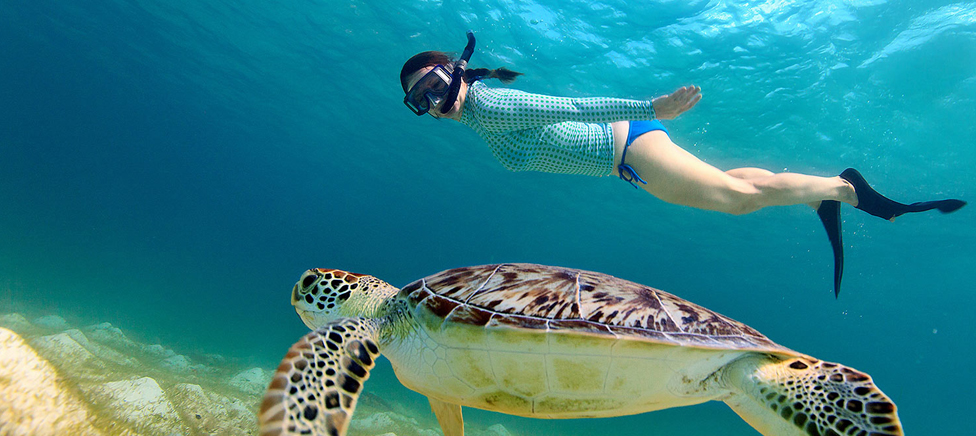
You do not need a certification, a course or any equipment of your own to see the best of the Red Sea. A mask, a snorkel and a boat get you over living coral within an hour of Hurghada — which is why snorkeling trips are the most booked thing we do.
The best places to go
- Giftun Island — the marine reserve closest to the city, with reef walls and drop-offs. The Paradise Island day trip combines it with beach time.
- Orange Bay — white sand and shallow turquoise water with reef within swimming distance. The most popular island day for a reason.
- Mahmya — on the northern tip of Giftun, inside the national park, with a protected beach and a genuinely healthy reef offshore.
- Eden Island — quieter than the better-known names, and better for it.
- Sharm El Naga — a bay south of the city where the reef starts a few meters from the sand, so you walk in.
- Marsa Mubarak, far south in Marsa Alam, where the seagrass meadow is a turtle feeding ground.
If you have never snorkeled
It is genuinely easy, and three things make the difference between a good day and a frustrating one:
- Fit the mask properly. Press it to your face without the strap and breathe in through your nose — it should hold itself there. If it does not, ask for a different one. A leaking mask ruins everything.
- Wear the life jacket. It keeps you afloat with no effort, so you can put your face in the water and simply look instead of concentrating on staying up.
- Breathe slowly and keep your fins under the surface. Splashing achieves nothing except scaring the fish.
What you will see
Hard and soft corals, and a great deal of fish: butterflyfish in pairs, angelfish, parrotfish that you can actually hear grazing on the coral, sergeant majors, wrasse, and clownfish in their anemones. Moray eels tuck into crevices. Blue-spotted rays sit on the sand. Turtles turn up more often than people expect.
Protecting the reef
This part matters. Coral is a colony of living animals, not rock. Standing on it kills decades of growth in a single step, and touching it damages the tissue even when it does not break.
- Never stand on, touch or hold coral.
- Keep your fins clear — most damage is done by fins, not hands.
- Do not feed the fish. It changes their behaviour and harms them.
- Take nothing out of the water, including shells.
- Use reef-safe sunscreen, or cover up with a rash vest instead.
What to bring
Swimwear, a towel, reef-safe sunscreen, a hat and a rash vest or long-sleeved swim top — your back faces a strong sun for hours while you are face down. Bring your own mask if you have one that fits.
All our snorkeling trips include equipment, a life jacket and a guide who gets in the water with you. See them on the tours page.
