
Luxor
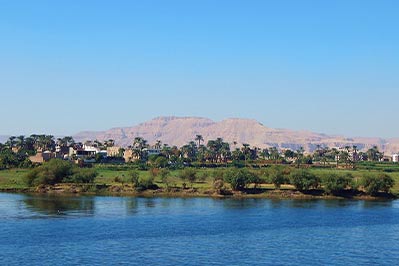
Luxor stands on the site of ancient Thebes, and it holds roughly a third of the world's surviving antiquities. The Nile splits it in two, and that division is not accidental: the living city, the temples of Karnak and Luxor and the markets are on the East Bank where the sun rises; the tombs, mortuary temples and the Valley of the Kings are on the West Bank, where it sets.
Karnak alone occupies over 100 hectares and was built and rebuilt across two thousand years. The Hypostyle Hall — 134 columns, the tallest of them 24 meters — is the single most impressive interior space surviving from the ancient world.
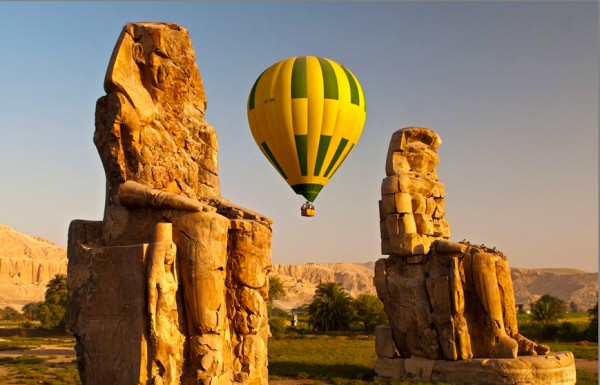
On the West Bank, the Valley of the Kings holds 63 known tombs including Tutankhamun's. The mortuary temple of Hatshepsut is cut into the cliff face in terraces, and the Colossi of Memnon stand alone in the fields where their temple once was.
What we run in Luxor
A sunrise hot air balloon flight over the West Bank, a sunset felucca sail to Banana Island, and private transfers between Luxor and Hurghada or the airport.
Practical notes
- Luxor is about four hours by road from Hurghada, through the Eastern Desert.
- Start early. From May to September the middle of the day at Karnak is punishing, and there is very little shade.
- Balloon flights depend entirely on wind and are cancelled when conditions are wrong — book them early in your stay so there is room to try again.
Explore the place

The City Maps
Subscribe to Our Newsletter
Get exclusive travel deals and tips delivered to your inbox
All rights reserved © 2026 by MC Travel Hurghada.
Licensed tour operator registered with the Egyptian Tax Authority · Tax registration 667-725-962 · Activity code 7912
Designed, developed & hosted by Hostinium

Messages
{{unread_count}}
Chat with: {{currentConversation.display_name}}